


Hey there! As a supplier of Aluminum Sulfate Granular, I'm super stoked to share with you how this nifty product can be used in leather processing. So, let's dive right in!
Understanding Aluminum Sulfate Granular
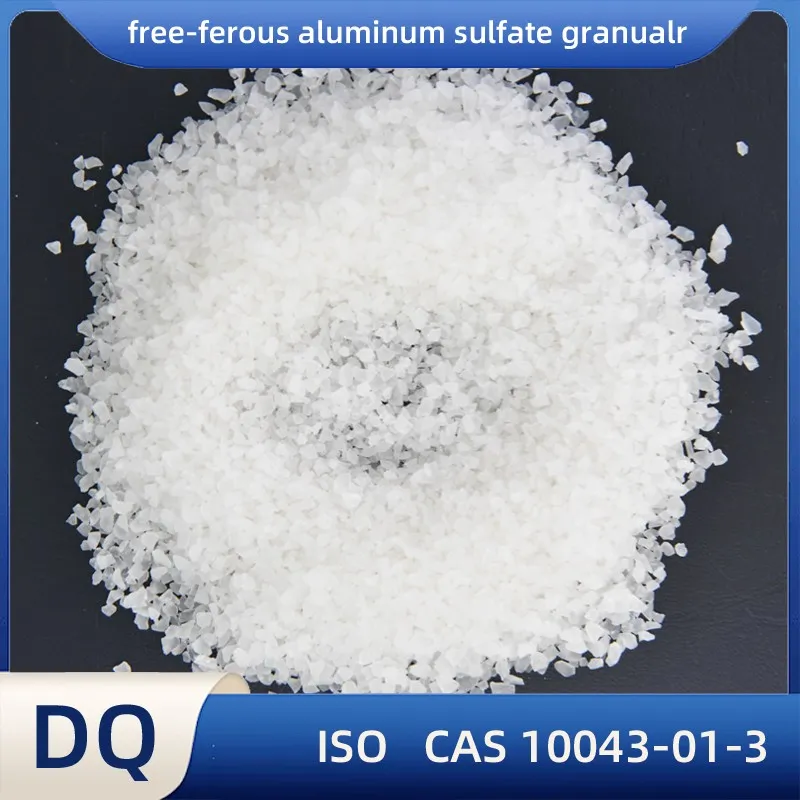
First off, what exactly is Aluminum Sulfate Granular? Well, it's a compound that's widely used in various industries, and leather processing is one of them. It comes in different grades, like 17% Aluminum Sulfate, Battery-grade Aluminum Sulfate, and Iron-ferric Aluminum Sulfare Granular. Each grade has its own unique properties and uses in leather processing.
Pre - tanning Stage
In the pre - tanning stage of leather processing, Aluminum Sulfate Granular plays a crucial role. One of the main functions is to help with the pickling process. Pickling is when the pH of the leather is adjusted to a specific level, usually between 2.5 and 3.5. Aluminum Sulfate can be added to the pickling bath. It dissociates in water to release aluminum ions. These ions interact with the collagen fibers in the leather.
The aluminum ions form weak bonds with the collagen, which helps to open up the fiber structure of the leather. This makes it easier for the tanning agents to penetrate the leather in the subsequent tanning process. It also helps to stabilize the leather during the pickling stage, preventing it from shrinking or losing its shape.
To use it in the pickling bath, you need to be careful with the dosage. Usually, a concentration of around 1 - 3% (by weight of the wet salted leather) is used. You first dissolve the Aluminum Sulfate Granular in water to make a solution. Then, you add this solution slowly to the pickling bath while stirring continuously. This ensures that the Aluminum Sulfate is evenly distributed in the bath.
Tanning Stage
During the tanning stage, Aluminum Sulfate Granular can be used as an auxiliary tanning agent. Traditional tanning agents like chrome are very effective, but they also have some environmental concerns. Aluminum Sulfate can be used in combination with other tanning agents to reduce the amount of chrome needed.
When used as an auxiliary tanning agent, Aluminum Sulfate helps to improve the tanning efficiency. It can enhance the fixation of the main tanning agents on the leather fibers. This results in a more uniform and better - quality tanned leather.
For example, in some vegetable - tanning processes, Aluminum Sulfate can be added to the tanning liquor. It helps the vegetable tannins to bind more effectively to the leather. The aluminum ions in the Aluminum Sulfate can form cross - links between the tannin molecules and the collagen fibers. This not only improves the tanning quality but also helps to reduce the tanning time.
The dosage in the tanning stage depends on the type of tanning process and the quality of the leather. Generally, a dosage of 0.5 - 2% (by weight of the wet salted leather) is common. You add it to the tanning liquor in a similar way as in the pickling stage, by first dissolving it in water and then adding it slowly while stirring.
Post - tanning Stage
In the post - tanning stage, Aluminum Sulfate Granular can be used for fatliquoring and retanning. Fatliquoring is the process of adding oils and fats to the leather to make it soft, flexible, and water - resistant. Aluminum Sulfate can be used to help the fatliquoring agents penetrate the leather better.
It works by modifying the surface charge of the leather fibers. The aluminum ions can interact with the fatliquoring agents and the leather fibers, creating a more favorable environment for the fatliquoring agents to be absorbed. This results in a more evenly fatliquored leather with better softness and flexibility.
For retanning, Aluminum Sulfate can be used to further improve the properties of the tanned leather. It can enhance the fullness and firmness of the leather. You can add it to the retanning bath at a dosage of around 0.5 - 1.5% (by weight of the tanned leather).
Advantages of Using Aluminum Sulfate Granular in Leather Processing
There are several advantages of using Aluminum Sulfate Granular in leather processing. Firstly, it's relatively inexpensive compared to some other tanning agents. This can help leather manufacturers to reduce their production costs.
Secondly, it's more environmentally friendly than some traditional tanning agents like chrome. While chrome tanning is very effective, it produces a lot of chromium - containing waste, which is harmful to the environment. Using Aluminum Sulfate Granular can reduce the reliance on chrome and thus reduce the environmental impact.
Thirdly, it can improve the quality of the leather. As mentioned earlier, it helps to open up the fiber structure, enhance the tanning efficiency, and improve the fatliquoring and retanning processes. This results in a leather with better softness, flexibility, and uniformity.
Tips for Using Aluminum Sulfate Granular
When using Aluminum Sulfate Granular in leather processing, there are a few tips to keep in mind. Firstly, always store it in a dry place. Moisture can cause the granules to clump together, which makes it difficult to dissolve.

Secondly, make sure to follow the recommended dosage. Too much Aluminum Sulfate can cause over - tanning, which can make the leather hard and brittle. On the other hand, too little may not have the desired effect.
Thirdly, when dissolving the granules in water, use warm water. This helps to speed up the dissolution process. And always stir the solution well to ensure that all the granules are completely dissolved.
Contact for Purchase and Discussion
If you're in the leather - processing industry and are interested in using Aluminum Sulfate Granular, I'd love to hear from you. Whether you have questions about the product, need advice on the dosage for your specific leather - processing needs, or want to discuss a potential purchase, don't hesitate to reach out. We can have a great chat about how this product can benefit your leather - making process.
References
- "Leather Processing Technology" by John Leatherman
- "Handbook of Tanning Agents" by Sarah Tanner
- Industry reports on sustainable leather processing


