


How to Improve the Sedimentation Speed after Adding Polyaluminum Chloride Powder in Water Treatment
As a supplier of Polyaluminum Chloride (PAC) Powder, I've encountered numerous inquiries from clients aiming to enhance the sedimentation speed during water treatment processes. In this blog, I'll share some practical and scientific approaches to address this common concern.
Understanding the Role of Polyaluminum Chloride Powder in Water Treatment
Polyaluminum Chloride Powder is a widely used coagulant in water treatment. Its high charge density and strong adsorption ability allow it to neutralize the surface charges of suspended particles in water, causing them to aggregate and form larger flocs. These flocs then settle more easily under the influence of gravity, thus clarifying the water. However, achieving an optimal sedimentation speed is often a challenge due to various factors.
Factors Affecting Sedimentation Speed
Before delving into improvement methods, it's essential to understand the factors that can impact the sedimentation speed after adding PAC Powder.
- Dosage of PAC Powder: An improper dosage can significantly affect the formation of flocs. If the dosage is too low, the coagulation effect may be insufficient, resulting in small and loosely bound flocs that settle slowly. On the other hand, an excessive dosage can lead to the re - stabilization of particles, also hindering sedimentation.
- Water Quality: The characteristics of the water, such as pH, temperature, turbidity, and the presence of other substances, can have a profound impact on the performance of PAC Powder. For example, different pH ranges can affect the hydrolysis of PAC and the charge state of particles, thereby influencing floc formation and sedimentation.
- Mixing Conditions: Adequate mixing is crucial for the uniform distribution of PAC Powder in water and the effective collision between PAC and suspended particles. Insufficient mixing can lead to uneven coagulation and slow sedimentation.
Strategies to Improve Sedimentation Speed
Optimize the Dosage of PAC Powder
Conducting jar tests is the most reliable way to determine the optimal dosage of PAC Powder. In a jar test, different dosages of PAC are added to several water samples under controlled conditions. After a certain period of mixing and sedimentation, the turbidity and sedimentation characteristics of each sample are measured. The dosage that results in the fastest sedimentation and the lowest turbidity is considered the optimal dosage.

It's important to note that the optimal dosage may vary depending on the water source and treatment requirements. Regularly monitoring water quality and adjusting the dosage accordingly can ensure consistent sedimentation performance.
Adjust the pH of the Water
The pH of the water plays a vital role in the coagulation process of PAC Powder. Generally, the optimal pH range for PAC coagulation is between 6 and 8. If the pH of the water is outside this range, it can be adjusted by adding acids or alkalis. For example, if the water is too acidic, adding lime or sodium hydroxide can increase the pH. Conversely, if the water is too alkaline, adding sulfuric acid or hydrochloric acid can lower the pH.
However, when adjusting the pH, it's necessary to consider the cost and potential side - effects. Excessive use of chemicals for pH adjustment can increase the treatment cost and may introduce additional substances into the water.
Improve Mixing Conditions
Proper mixing is essential for the efficient use of PAC Powder. There are two main stages of mixing: rapid mixing and slow mixing.
- Rapid Mixing: In the rapid mixing stage, the PAC Powder should be quickly and uniformly dispersed in water to ensure maximum contact between PAC and suspended particles. High - speed mixers or in - line mixers can be used to achieve this. The mixing time is usually short, typically within 1 - 2 minutes, with a high mixing intensity (G value of about 500 - 1000 s⁻¹).
- Slow Mixing: After rapid mixing, slow mixing is required to promote the growth of flocs. During this stage, the mixing intensity should be reduced (G value of about 20 - 70 s⁻¹) to allow the flocs to collide and combine with each other without breaking them apart. The slow mixing time is usually longer, ranging from 15 - 30 minutes.
Combine with Other Coagulants or Flocculants
In some cases, combining PAC Powder with other coagulants or flocculants can improve the sedimentation speed. For example, adding anionic or cationic polyacrylamide (PAM) after the addition of PAC can help to bridge the flocs and make them larger and denser, thereby accelerating sedimentation.
When using a combination of coagulants and flocculants, it's important to determine the appropriate sequence and dosage through jar tests. Usually, PAC is added first for coagulation, followed by PAM for flocculation.
The Use of Different Grades of PAC for Specific Applications
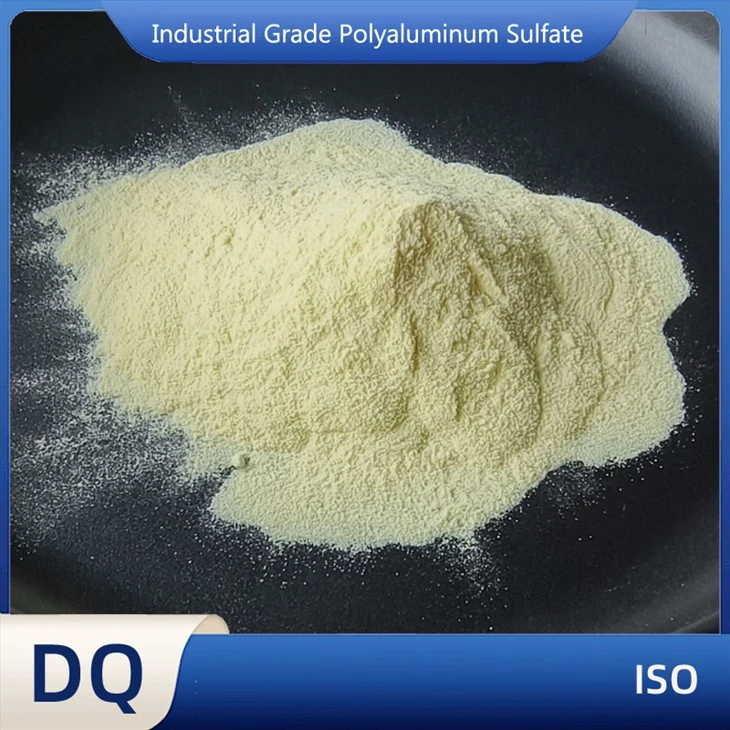
As a PAC Powder supplier, we offer a variety of products to meet different water treatment needs. For example, Industrial Grade Polyaluminum Sulfate is suitable for industrial water treatment, where it can effectively remove suspended solids and heavy metals. Polyaluminum Chloride for Coal Mine is specifically designed for the treatment of coal mine wastewater, which often contains high levels of coal dust and other impurities. And 28% Polyaluminum Chloride is a popular choice for general water treatment applications, providing a good balance between performance and cost.
Conclusion
Improving the sedimentation speed after adding Polyaluminum Chloride Powder in water treatment requires a comprehensive understanding of the factors affecting sedimentation and the application of appropriate strategies. By optimizing the dosage, adjusting the pH, improving mixing conditions, and using the right combination of coagulants, it's possible to achieve faster and more efficient sedimentation.
If you are facing challenges in water treatment or are interested in purchasing high - quality Polyaluminum Chloride Powder, please feel free to contact us for further discussion and procurement negotiation. We are committed to providing you with the best products and solutions to meet your water treatment needs.
References
- Letterman, R. D. (2013). Water Quality and Treatment: A Handbook of Community Water Supplies. McGraw - Hill.
- Amirtharajah, A., & O'Melia, C. R. (1990). Coagulation and Filtration in Water and Wastewater Treatment. Butterworth - Heinemann.
- Gregory, J., & Barany, A. (2006). Coagulation and Flocculation: Theory and Practice. Wiley - VCH.


