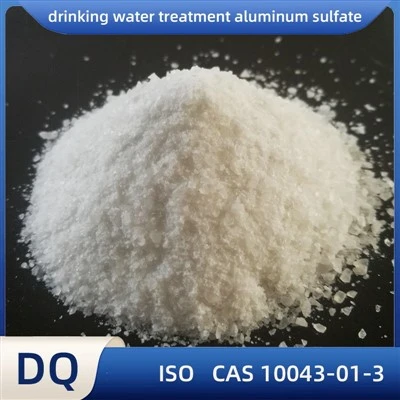
Zibo Dingqi Chemicals Co., Ltd. is one of the most experienced manufacturers and suppliers of liquid aluminum sulfate for wastewater treatment in China. Welcome to wholesale high quality liquid aluminum sulfate for wastewater treatment made in China here from our factory. For price consultation, contact us.
Product Overview
Liquid aluminum sulfate is an aqueous inorganic coagulant engineered for industrial water treatment and clarification systems. It operates primarily through aluminum ion hydrolysis, neutralizing negative surface charges on suspended solids, colloidal particles, and select impurities to drive effective flocculation and solid-liquid separation.
Chemical Classification: Inorganic Aluminum-Based Coagulant
Physical Presentation: Clear to light-colored liquid solution
Primary Industrial Sector: Industrial Wastewater Treatment & Effluent Clarification
Supply Capabilities: Bulk industrial distribution; specifications aligned with project requirements
Technical Specification and Parameter Framework
|
Parameter Metric |
Technical Specification Basis and Evaluation Value |
|
Physical Form |
Aqueous liquid solution, free of visible foreign matter |
|
Aluminum Content (Al2O3) |
Verified via standard titration methods to ensure active ion concentration |
|
Iron Content (Fe) |
Controlled limits to prevent downstream discoloration or process interference |
|
Insoluble Matter |
Minimized solid residue to protect dosing pumps and prevent line clogging |
|
PH Value |
Measured at specified dilution ratios to assess chemical compatibility |
|
Density and Specific Gravity |
Essential calculation metric for bulk storage, tank sizing, and metering calibration |
Chemical Hydrolysis and Treatment Mechanism
Upon introduction into an aqueous treatment system, liquid aluminum sulfate undergoes rapid dissociation and hydrolysis. This process generates reactive mononuclear and polynuclear aluminum species that interact directly with suspended impurities.
Destabilization (Coagulation): Rapid-mix deployment disperses the solution, neutralizing the electrical charges of colloidal particles and suppressing inter-particle repulsive forces.
Aggregation (Flocculation): Controlled slow-speed agitation promotes physical collisions between destabilized particles, binding them into dense, rapid-settling flocs.
Clarification (Separation): Aggregated flocs are removed via downstream sedimentation, flotation, or filtration stages.
Target Industrial Applications
Liquid aluminum sulfate is integrated into heavy-duty water treatment trains where aluminum coagulation aligns with system chemistry.
Industrial Effluent Treatment: Deployed in treatment systems handling complex wastewater from manufacturing, chemical processing, and industrial facilities.
Suspended Solids Reduction: Assists in the aggregation of fine particulates to lower effluent turbidity prior to discharge or reuse.
Clarification Enhancement: Applied in primary and secondary clarification units to accelerate settling velocities and optimize solid-liquid separation performance.
Automated Dosing Integration: Supplied in ready-to-use liquid form, eliminating on-site dissolution steps when matched with compatible chemical metering infrastructure.
Quality Control and Manufacturing Verification
Consistent chemical performance relies on disciplined manufacturing controls rather than generic quality statements. Production oversight encompasses:
Raw Material Testing: Incoming raw materials undergo rigorous purity and composition checks.
In-Process Monitoring: Reaction parameters, including temperature, concentration, and density, are systematically tracked during synthesis.
Batch Traceability: Every production lot is sampled and verified against established parameters, with data archived for full traceability.
Storage, Handling and Safety Guidelines
Proper management of liquid chemical solutions safeguards equipment integrity and operator safety.
Container Compatibility: Store within tanks constructed of compatible materials such as fiber-reinforced plastic, cross-linked polyethylene, or rubber-lined steel.
Temperature Management: Protect storage systems from extreme freezing conditions to prevent crystallization or phase separation.
Handling Precautions: Operators must utilize appropriate personal protective equipment, including chemical-resistant gloves, eye protection, and protective clothing during transfer operations.
FAQ
Q: What is the standard concentration range for liquid aluminum sulfate?
A: Liquid aluminum sulfate concentrations typically vary depending on the specific industrial grade supplied. Common commercial solutions usually express active content based on aluminum oxide equivalents, commonly ranging within specific technical thresholds. Buyers must verify exact active percentages, specific gravity, and temperature-dependent crystallization points using the official technical data sheet before finalizing chemical storage and dosing system designs.
Q: Can liquid aluminum sulfate be used directly without dilution?
A: Yes, liquid aluminum sulfate is supplied as an aqueous solution designed for direct dosing via compatible metering pumps, bypassing the dry powder dissolution steps required for solid coagulants. However, system compatibility depends on the design of the existing chemical feed infrastructure, including injection quill materials, line sizing, and pump stroke rates to ensure proper initial mixing within the water stream.
Q: What packaging options are available for bulk transport?
A: Delivery packaging accommodates various facility intake capabilities and consumption volumes. Standard delivery methods include intermediate bulk containers (IBC totes), sealed industrial drums, and bulk tanker truck deliveries for high-volume industrial operations. Site accessibility, offloading equipment, and local containment regulations dictate the most suitable packaging configuration.
Q: How does liquid aluminum sulfate react with varying wastewater pH levels?
A: Aluminum-based coagulants operate effectively within specific optimal pH ranges, typically between slightly acidic to neutral conditions. If influent wastewater falls outside this optimal operating window, supplementary alkalinity or acid-base adjustment chemicals may be required upstream to ensure complete hydrolysis, effective floc formation, and optimal contaminant removal.
Q: What documentation is provided with each commercial shipment?
A: Each commercial shipment is accompanied by standard compliance and verification documentation to support facility quality control audits. This typically includes a batch-specific certificate of analysis detailing active content and impurity parameters, along with the safety data sheet outlining proper handling, storage, and emergency response procedures.
Hot Tags: liquid aluminum sulfate for wastewater treatment, China liquid aluminum sulfate for wastewater treatment manufacturers, suppliers, factory, aluminum sulfate for commercial purpose, aluminum sulfate for flotation, aluminum sulfate for profit making, export of aluminum sulfate, first class aluminum sulfate, in testing procedure aluminum sulfate