


Hey there! As a supplier of Low Basicity Polyaluminum Chloride, I often get asked about the difference between low basicity polyaluminum chloride and high - basicity polyaluminum chloride. So, I thought I'd write this blog to clear things up.
First off, let's talk about what basicity means in the context of polyaluminum chloride (PAC). Basicity is basically a measure of the degree of hydrolysis of aluminum salts in PAC. It's expressed as a percentage, and it affects the chemical properties and performance of PAC in various applications.
Chemical Structure and Properties
Low basicity polyaluminum chloride typically has a basicity range of around 20% - 40%. This lower basicity means that there are more free aluminum ions in the solution. These free ions can react more readily with contaminants in water, especially those with a negative charge. For example, in water treatment, they can quickly neutralize the charge of suspended particles, causing them to clump together and settle out.
On the other hand, high - basicity polyaluminum chloride has a basicity of 60% - 95%. With a higher degree of hydrolysis, it forms larger polymeric aluminum species. These polymers are more effective at bridging between particles and forming larger flocs. The larger flocs settle faster and are easier to remove from the water.
Water Treatment Applications
In water treatment, the choice between low and high basicity PAC depends on the type of water being treated.
Low Basicity PAC
When dealing with water that has a high concentration of fine suspended solids, low basicity PAC can be a great choice. The free aluminum ions can rapidly neutralize the charge of these small particles, initiating the coagulation process. For instance, in industrial wastewater that contains a lot of colloidal matter, low basicity PAC can quickly break the stability of these colloids, making them easier to filter out. You can check out our Low Basicity Polyaluminum Chloride product for more details.
High Basicity PAC
High basicity PAC is more suitable for water with a lower turbidity or for situations where you need to form large, dense flocs quickly. In drinking water treatment, for example, where the goal is to produce clear and clean water with minimal residual aluminum, high basicity PAC can be used to form large flocs that settle out easily. The large flocs can also entrap other impurities, such as bacteria and viruses, making it easier to remove them during the filtration process.
Other Applications
Apart from water treatment, PAC is also used in other industries.
Paper Industry
In the paper industry, low basicity PAC can be used as a sizing agent. The free aluminum ions can react with the pulp fibers and sizing agents to improve the paper's water resistance and strength. High basicity PAC, on the other hand, can be used for retention and drainage improvement. The large polymeric species can help to retain fillers and fines in the paper, improving the paper's quality and reducing production costs.
Textile Industry
In the textile industry, low basicity PAC can be used for dyeing wastewater treatment. It can effectively remove dyes and other organic pollutants from the wastewater. High basicity PAC can be used for fabric finishing, where it can improve the fabric's softness and anti - static properties.
Cost and Dosage
Another important factor to consider is the cost and dosage. Generally, low basicity PAC is less expensive than high basicity PAC. However, the dosage required may be higher in some cases. Since low basicity PAC relies more on the reaction of free aluminum ions, you may need to add more of it to achieve the same level of treatment as high basicity PAC. High basicity PAC, although more expensive, often requires a lower dosage due to its more efficient flocculation ability.
Storage and Stability
Low basicity PAC is more stable in storage. The lower degree of hydrolysis means that it is less likely to undergo further hydrolysis reactions during storage, which can lead to the formation of precipitates. High basicity PAC, on the other hand, is more prone to hydrolysis and precipitation, especially in high - temperature or high - humidity conditions. So, proper storage conditions are crucial for high basicity PAC to maintain its effectiveness.
Which One Should You Choose?
The choice between low and high basicity polyaluminum chloride depends on your specific needs. If you're dealing with highly turbid water with fine particles, low basicity PAC might be the way to go. If you need to form large flocs quickly or are treating water with lower turbidity, high basicity PAC could be more suitable.
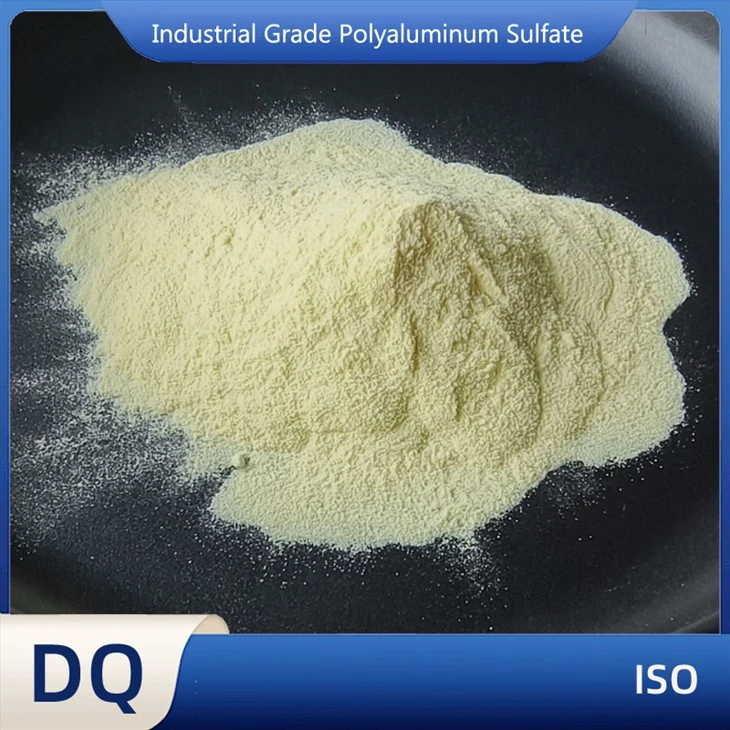
We also offer Industrial Grade Polyaluminum Sulfate and Medium Basicity Polyaluminum Chloride for different applications. If you're not sure which product is right for you, feel free to reach out to us. We have a team of experts who can help you make the best choice based on your specific requirements.
If you're interested in purchasing our Low Basicity Polyaluminum Chloride or have any questions about our products, don't hesitate to contact us for a detailed discussion. We're here to provide you with the best solutions for your water treatment and industrial needs.

References
- "Water Treatment Chemicals: Chemistry and Technology" by David W. Hand, et al.
- "Industrial Applications of Polyaluminum Chloride" by various authors in industry - related journals.


