


Over the years, the production process of Non - ferric Aluminum Sulfate has witnessed significant evolution, driven by technological advancements, environmental concerns, and the increasing demand for high - quality products in various industries. As a supplier of Non - ferric Aluminum Sulfate, I have had the privilege of observing and being part of these changes firsthand.
Early Production Methods
The history of aluminum sulfate production dates back to the 19th century. Initially, the production of non - ferric aluminum sulfate was a relatively simple but labor - intensive process. The primary raw materials used were bauxite and sulfuric acid. Bauxite, a mineral rich in aluminum oxides, was the main source of aluminum. The bauxite was first crushed into small pieces and then reacted with sulfuric acid in large reaction vessels.
The reaction between bauxite and sulfuric acid is exothermic and can be represented by the following chemical equation:
[Al_2O_3 + 3H_2SO_4 \rightarrow Al_2(SO_4)_3+3H_2O]

However, bauxite often contains impurities, including iron compounds. To obtain non - ferric aluminum sulfate, additional purification steps were required. One of the early methods was precipitation. After the reaction, the solution was allowed to stand for a long time, and the iron impurities would gradually precipitate at the bottom of the vessel. The supernatant, which contained relatively pure aluminum sulfate, was then carefully decanted.
This early production method had several limitations. The reaction rate was slow, and the yield was relatively low. The purification process was not very efficient, and it was difficult to completely remove all the iron impurities. Moreover, the production process was highly dependent on manual labor, which led to inconsistent product quality.
Technological Advancements in the Mid - 20th Century
With the development of chemical engineering in the mid - 20th century, significant improvements were made to the production process of non - ferric aluminum sulfate. One of the key advancements was the use of more refined raw materials. Instead of using bauxite directly, high - purity aluminum hydroxide was increasingly used as the aluminum source. Aluminum hydroxide has a higher aluminum content and fewer impurities compared to bauxite, which simplifies the production process and improves the product quality.
The reaction between aluminum hydroxide and sulfuric acid is as follows:
[2Al(OH)_3+3H_2SO_4 \rightarrow Al_2(SO_4)_3 + 6H_2O]
In addition to using better raw materials, new reaction equipment was introduced. Continuous reaction systems were developed, which replaced the traditional batch - type reaction vessels. In a continuous reaction system, the raw materials are continuously fed into the reactor, and the reaction products are continuously discharged. This not only increases the production efficiency but also ensures a more stable product quality.
Another important development was the improvement of the purification technology. Ion - exchange resins were widely used to remove trace iron impurities. Ion - exchange resins are porous materials that can selectively adsorb certain ions. By passing the aluminum sulfate solution through an ion - exchange column filled with resins that have a high affinity for iron ions, the iron impurities can be effectively removed. This method is more efficient and precise than the traditional precipitation method.
Modern Production Processes
In recent decades, the production process of non - ferric aluminum sulfate has continued to evolve, driven by the need for higher quality, more environmentally friendly, and more cost - effective production.
One of the most significant modern advancements is the use of advanced automation and control systems. These systems can monitor and adjust various parameters in the production process, such as temperature, pressure, and reactant flow rate, in real - time. This ensures that the reaction conditions are always optimal, leading to higher yields and better product quality. For example, temperature control is crucial in the reaction between aluminum hydroxide and sulfuric acid. If the temperature is too high, side reactions may occur, which can reduce the product quality. With an automated temperature control system, the temperature can be maintained within a narrow range, ensuring a stable and efficient reaction.
Environmental concerns have also played a major role in shaping the modern production process. In the past, the production of aluminum sulfate generated a large amount of waste acid and solid waste. To address these issues, modern production facilities have implemented waste treatment and recycling systems. The waste acid can be recycled and reused in the production process after purification, reducing the consumption of fresh sulfuric acid. The solid waste can also be treated and converted into useful by - products, such as construction materials.
Another trend in modern production is the development of specialized products. Different industries have different requirements for non - ferric aluminum sulfate. For example, the Drinking Water Treatment Aluminum Sulfate used in the water treatment industry needs to meet strict purity and safety standards. To meet these specific requirements, manufacturers have developed specialized production processes and quality control systems.
Applications and Market Demand
Non - ferric aluminum sulfate has a wide range of applications in various industries. In the water treatment industry, it is used as a coagulant to remove suspended solids, colloids, and organic matter from water. The high - purity Iron - free Aluminum Sulfate is particularly suitable for drinking water treatment, as it does not introduce iron impurities that can cause discoloration and other problems in the treated water.
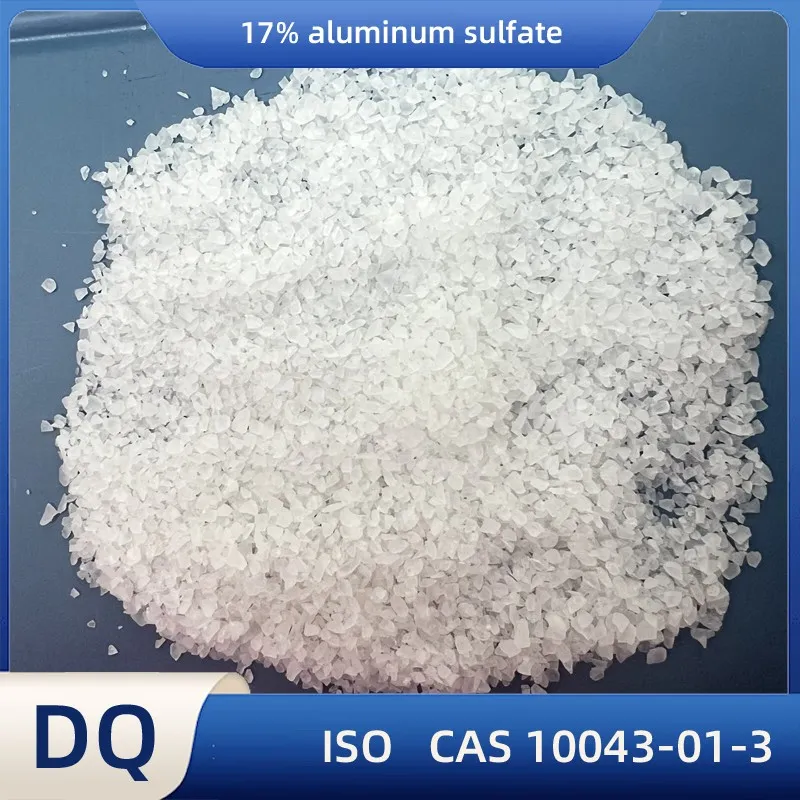
In the paper industry, non - ferric aluminum sulfate is used as a sizing agent. It helps to improve the water resistance and strength of paper. The 17% Aluminum Sulfate is a commonly used product in this industry, as it provides the right balance of performance and cost.
The market demand for non - ferric aluminum sulfate has been increasing steadily over the years. With the growing population and increasing industrialization, the demand for clean water and high - quality paper products is on the rise. Moreover, the strict environmental regulations in many countries have also promoted the use of high - purity non - ferric aluminum sulfate in water treatment and other industries.
Conclusion
The production process of non - ferric aluminum sulfate has come a long way since its early days. From the simple and labor - intensive methods of the 19th century to the highly automated and environmentally friendly processes of today, technological advancements have played a crucial role in driving this evolution. As a supplier of non - ferric aluminum sulfate, I am committed to keeping up with the latest technological trends and continuously improving our production process to meet the changing needs of our customers.
If you are interested in purchasing high - quality non - ferric aluminum sulfate for your specific application, please feel free to contact us for further discussion. We have a team of experts who can provide you with professional advice and customized solutions.
References
- Chemical Engineering Handbook. Various editions.
- Journal of Chemical Technology and Biotechnology. Articles related to aluminum sulfate production.
- Environmental Science and Technology. Publications on waste treatment in aluminum sulfate production.


