


What is the thermal conductivity of Iron - free Aluminum Sulfate?
As a supplier of iron - free aluminum sulfate, I often encounter various inquiries from customers about the properties of this product. One question that has recently piqued my interest is about the thermal conductivity of iron - free aluminum sulfate. In this blog post, I will delve into this topic, exploring what thermal conductivity is, the factors that affect it in iron - free aluminum sulfate, and its significance in different applications.
Understanding Thermal Conductivity
Thermal conductivity is a fundamental property of materials that describes their ability to conduct heat. It is defined as the quantity of heat that passes through a unit area of a material per unit time under a unit temperature gradient. Mathematically, it is represented by the symbol "k" and is measured in watts per meter - kelvin (W/(m·K)). A high thermal conductivity means that a material can transfer heat quickly, while a low thermal conductivity indicates that the material is a poor conductor of heat and may act as an insulator.

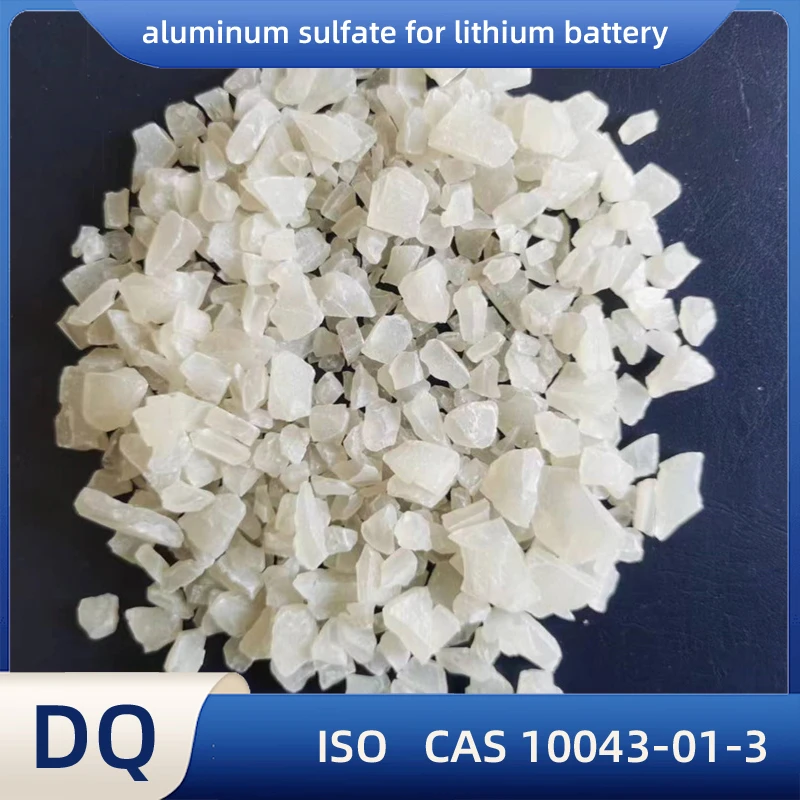
Thermal Conductivity of Iron - free Aluminum Sulfate
Iron - free aluminum sulfate, with the chemical formula $Al_2(SO_4)_3$, exists in different forms, such as the hydrated form and granular form. The thermal conductivity of a substance can be influenced by several factors, including its molecular structure, crystal structure, temperature, and impurities.
In the case of iron - free aluminum sulfate, its thermal conductivity is relatively low compared to metals. Metals are excellent conductors of heat due to the presence of free electrons that can easily transfer thermal energy. Aluminum sulfate, on the other hand, is an ionic compound. The heat transfer in ionic compounds mainly occurs through lattice vibrations (phonons).
The hydrated form of iron - free aluminum sulfate, like Aluminum Sulfate14 - Hydrate, contains water molecules within its crystal structure. These water molecules can affect the thermal conductivity. The presence of water can act as a barrier to phonon propagation, reducing the overall thermal conductivity. The water molecules can also absorb and release heat energy through phase changes, which further complicates the heat transfer process.
The Aluminum Sulfate Granular 1 - 8mm form has a different structure compared to the hydrated form. The granular nature of the material creates voids and interfaces between the granules. These voids can trap air, which is a poor conductor of heat. As a result, the thermal conductivity of the granular form may be even lower than that of the hydrated form.
Factors Affecting the Thermal Conductivity of Iron - free Aluminum Sulfate
- Temperature: Generally, the thermal conductivity of most materials changes with temperature. For ionic compounds like iron - free aluminum sulfate, as the temperature increases, the lattice vibrations become more intense. At low temperatures, the thermal conductivity may increase slightly with temperature as the phonons gain more energy and can transfer heat more effectively. However, at higher temperatures, the increased lattice vibrations can also lead to more scattering of phonons, which may cause the thermal conductivity to decrease.
- Purity: Since we are dealing with iron - free aluminum sulfate, the absence of iron impurities is crucial. Impurities can act as scattering centers for phonons, reducing the thermal conductivity. Even small amounts of iron or other metal impurities can significantly affect the heat transfer properties of the material. A high - purity iron - free aluminum sulfate will have a more consistent and predictable thermal conductivity compared to a product with impurities.
- Crystal Structure: The crystal structure of iron - free aluminum sulfate can vary depending on the manufacturing process and conditions. Different crystal structures have different arrangements of ions and molecules, which can affect the phonon propagation. For example, a well - ordered crystal structure may allow phonons to travel more freely, resulting in a higher thermal conductivity compared to a disordered or amorphous structure.
Significance of Thermal Conductivity in Applications
- Water Treatment: Iron - free aluminum sulfate is widely used in Water Treatment Aluminum Sulfate applications. In water treatment plants, the thermal conductivity of the aluminum sulfate can play a role in the mixing and reaction processes. When aluminum sulfate is added to water, heat is generated during the hydrolysis reaction. A proper understanding of its thermal conductivity can help in designing efficient mixing systems to ensure uniform distribution of the chemical and complete reaction. If the thermal conductivity is too low, it may take longer for the heat to dissipate, which could potentially affect the reaction rate and the overall efficiency of the water treatment process.
- Paper Industry: In the paper industry, iron - free aluminum sulfate is used as a sizing agent. The thermal conductivity can affect the drying process of the paper. During the papermaking process, the paper web needs to be dried quickly and uniformly. If the aluminum sulfate in the paper has a high thermal conductivity, it can help in transferring heat more efficiently from the drying equipment to the paper, reducing the drying time and improving the quality of the paper.
- Fire - Retardant Applications: Iron - free aluminum sulfate can be used in some fire - retardant formulations. Its low thermal conductivity can contribute to its fire - retardant properties. When exposed to high temperatures, the low thermal conductivity means that the material will not conduct heat quickly, which can help in preventing the spread of fire and protecting the underlying materials.
Measuring the Thermal Conductivity of Iron - free Aluminum Sulfate
Measuring the thermal conductivity of iron - free aluminum sulfate can be challenging due to its complex nature. There are several methods available for measuring thermal conductivity, such as the steady - state method and the transient method.
The steady - state method involves creating a steady - state temperature gradient across a sample of the material and measuring the heat flux through it. This method is relatively simple but requires a long time to reach a steady state. The transient method, on the other hand, measures the temperature response of the material to a sudden heat input. This method is faster but requires more sophisticated equipment and data analysis.
Conclusion
In conclusion, the thermal conductivity of iron - free aluminum sulfate is an important property that can affect its performance in various applications. It is influenced by factors such as temperature, purity, and crystal structure. A better understanding of its thermal conductivity can lead to more efficient use of the product in industries such as water treatment, paper manufacturing, and fire - retardant applications.
If you are interested in learning more about iron - free aluminum sulfate or have specific requirements for your applications, I encourage you to contact us for further discussion. We are committed to providing high - quality iron - free aluminum sulfate products and technical support to meet your needs.
References
- Incropera, F. P., & DeWitt, D. P. (2002). Fundamentals of Heat and Mass Transfer. John Wiley & Sons.
- Zhang, Z. M. (2007). Nano/Microscale Heat Transfer. McGraw - Hill.


