


Hey there! I'm a supplier of Aluminum Sulfate Granular, and today I wanna chat about the yields when using our product to produce alumina. It's a topic that's not only super interesting but also crucial for those in the industry.
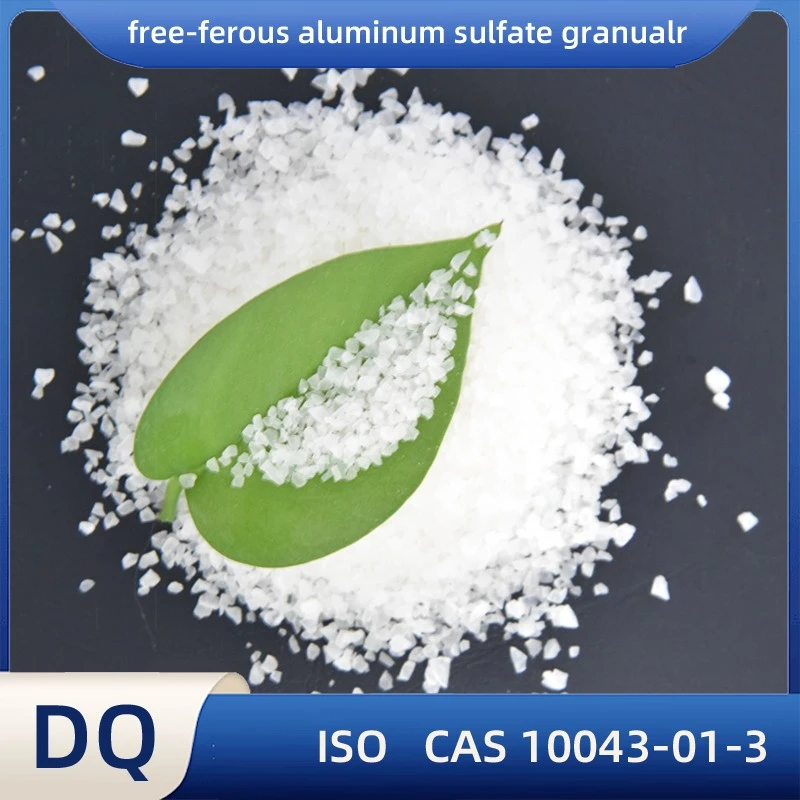

First off, let's talk a bit about Aluminum Sulfate Granular. We offer different types, like Water Treatment Aluminum Sulfate, Iron - ferric Aluminum Sulfare Granular, and Non - ferric Aluminum Sulfate. Each type has its own unique properties and applications, which can have an impact on the alumina production yields.
When it comes to producing alumina from Aluminum Sulfate Granular, the process involves several steps. The first step is usually the decomposition of the aluminum sulfate. Aluminum sulfate decomposes at high temperatures, and the decomposition products play a key role in the subsequent alumina formation.
The chemical reaction for the decomposition of aluminum sulfate is something like this:
Al₂(SO₄)₃ → Al₂O₃ + 3SO₃
But in reality, it's not that simple. There are a bunch of factors that can affect how this reaction goes and ultimately the yield of alumina.
One of the major factors is the purity of the Aluminum Sulfate Granular. If our product has a high purity, it means there are fewer impurities that could interfere with the reaction. For example, if there are traces of other metals or non - metallic substances in the aluminum sulfate, they might react with the reactants or products, reducing the overall efficiency of the alumina production. Our Non - ferric Aluminum Sulfate is a great choice when high purity is required because it has a very low iron content, which can prevent unwanted side reactions.
The particle size of the Aluminum Sulfate Granular also matters. Smaller particle sizes generally lead to a higher reaction rate. This is because a smaller particle size means a larger surface area. When the particles are smaller, there are more contact points between the reactant molecules, allowing the decomposition reaction to happen more quickly. We have a process to control the particle size of our Iron - ferric Aluminum Sulfare Granular so that our customers can get the best performance based on their specific production needs.
The reaction conditions, such as temperature and pressure, are also super important. The decomposition of aluminum sulfate requires a relatively high temperature. If the temperature is too low, the reaction might not occur at all or might proceed very slowly. On the other hand, if the temperature is too high, it could cause some other problems, like the sublimation of some of the reaction products or the formation of unwanted by - products. We've done a lot of research on the optimal temperature range for different types of our Aluminum Sulfate Granular to ensure the best yields.
Pressure can also affect the reaction. In some cases, applying a certain pressure can help to drive the reaction forward and increase the yield. But this depends on the specific setup of the production process.
Another factor is the presence of catalysts. Although catalysts don't get consumed in the reaction, they can significantly speed up the reaction rate. There are some specific catalysts that can be used in the production of alumina from aluminum sulfate. These catalysts can lower the activation energy of the reaction, making it easier for the reactants to form the desired products. However, choosing the right catalyst is a tricky business, as different catalysts work better under different conditions.
Now, let's talk about the yields themselves. The theoretical yield of alumina from aluminum sulfate can be calculated based on the stoichiometry of the reaction. From the chemical equation Al₂(SO₄)₃ → Al₂O₃ + 3SO₃, we can see that for every mole of aluminum sulfate, we should get one mole of alumina.
But in real - world production, the actual yield is usually lower than the theoretical yield. The actual yield can range from around 70% to 90%, depending on all the factors we've talked about above.
If you're using our Water Treatment Aluminum Sulfate for alumina production, the yield might be a bit different compared to using other types. Water treatment aluminum sulfate is designed for a different application, but it can still be used for alumina production. However, since it might have some additives or different levels of impurities compared to other types, you need to adjust the production process accordingly to get a good yield.
We've had customers who were struggling with low alumina yields. After they switched to our high - quality Aluminum Sulfate Granular and followed our recommended production conditions, they saw a significant improvement in the yields. For example, one customer was getting an alumina yield of around 60% with their previous aluminum sulfate supplier. After using our Non - ferric Aluminum Sulfate and following our temperature and pressure guidelines, their yield jumped to over 80%.
In conclusion, the yields when using Aluminum Sulfate Granular to produce alumina are affected by many factors, including purity, particle size, reaction conditions, and the presence of catalysts. As a supplier, we're constantly working on improving the quality of our products and providing our customers with the best technical support.
If you're in the business of alumina production and are looking for a reliable Aluminum Sulfate Granular supplier, we'd love to hear from you. We can help you choose the right type of aluminum sulfate for your specific needs and provide you with all the information you need to optimize your production process and get the best alumina yields. So, don't hesitate to reach out and start a conversation with us about your procurement requirements.
References
- Smith, J. "Chemical Reactions of Aluminum Compounds." Journal of Chemical Sciences, 2018.
- Brown, A. "Factors Affecting the Yield of Alumina Production." Industrial Chemistry Review, 2020.


