


Hey there, fellow farmers and agriculture enthusiasts! I'm a supplier of Non - ferric Aluminum Sulfate, and I'm super stoked to chat with you about the optimal application rates of this nifty product in agriculture.
First off, let's quickly go over what Non - ferric Aluminum Sulfate is. It's a chemical compound that's widely used in various industries, and in agriculture, it plays some pretty important roles. It can be used to adjust soil pH, control pests, and even improve the quality of water in irrigation systems.
Now, when it comes to the optimal application rates, it really depends on a few different factors. One of the main things is the type of soil you're dealing with. Different soils have different properties, like their existing pH levels, texture, and nutrient content.

Application for Soil pH Adjustment
If you're using Non - ferric Aluminum Sulfate to lower the soil pH, you gotta be careful. You don't want to go overboard and make the soil too acidic. For most agricultural soils, a general rule of thumb is to start with a small amount and then test the soil regularly.
Let's say you have a loamy soil. A good starting point could be around 50 - 100 pounds per acre. But if you have a sandy soil, which drains faster and has less buffering capacity, you might want to start with a bit less, maybe 30 - 60 pounds per acre. And for clay soils, which are more compact and have a higher buffering capacity, you could start with 80 - 120 pounds per acre.
But remember, these are just rough estimates. You should always get your soil tested before applying any amendments. You can use a simple soil test kit from your local farm supply store or send a sample to a professional lab for a more detailed analysis.
Application for Pest Control
Non - ferric Aluminum Sulfate can also be used as a natural pest control method. It can help control certain types of fungi and insects. When using it for this purpose, the application rate is usually lower.
For foliar applications, you can make a solution by dissolving about 1 - 2 pounds of Non - ferric Aluminum Sulfate in 100 gallons of water. Then, spray this solution on the leaves of your plants. This can help prevent fungal diseases like powdery mildew and black spot.
If you're using it to control soil - borne pests, you can apply it directly to the soil. A rate of 20 - 40 pounds per acre is often recommended. But again, it's important to monitor your plants closely after application to make sure you're not causing any damage.
Different Forms of Non - ferric Aluminum Sulfate
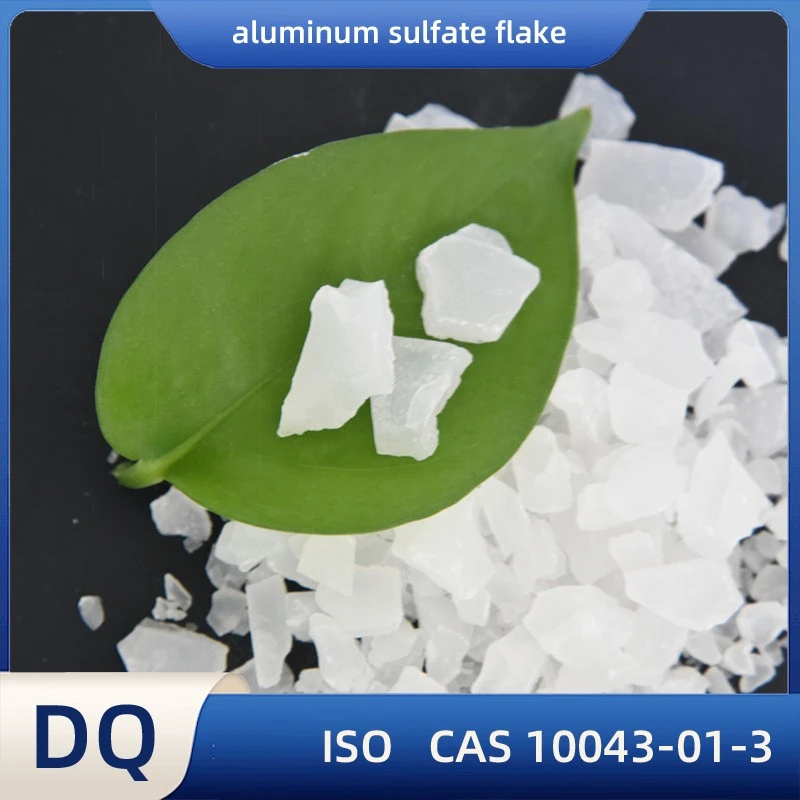
We offer Non - ferric Aluminum Sulfate in different forms, like Aluminum Sulfate Flake, Aluminum Sulfate Granular 1 - 8mm, and Aluminum Sulfate18 - Hyfrate. Each form has its own advantages and application methods.
The flake form is easy to dissolve in water, making it great for foliar applications and for mixing into irrigation systems. The granular form is more suitable for direct soil application. It can be spread evenly over the soil surface and then incorporated into the soil with a tiller or a rake. The 18 - hyfrate form is a hydrated version, which means it has water molecules attached to it. This can make it more stable and easier to handle in some cases.
Water Treatment in Irrigation Systems
Another important use of Non - ferric Aluminum Sulfate in agriculture is water treatment in irrigation systems. It can help remove impurities and improve the quality of the water.
When using it for water treatment, the application rate depends on the quality of the water. If you have water with a high level of suspended solids or turbidity, you might need to add more. A common starting point is to add about 10 - 20 pounds of Non - ferric Aluminum Sulfate per million gallons of water.
You can add it to a mixing tank and then pump the treated water into your irrigation system. This can help prevent clogging of the irrigation nozzles and improve the overall efficiency of your irrigation system.
Monitoring and Adjusting
Once you've applied Non - ferric Aluminum Sulfate, it's crucial to monitor your soil, plants, and water quality. Keep an eye on the growth and health of your plants. If you notice any signs of stress, like yellowing leaves or stunted growth, it could be a sign that you've applied too much or too little.
Test your soil regularly to check the pH and nutrient levels. If the pH has changed more than you expected, you might need to adjust your application rate in the future. Also, monitor the water quality in your irrigation system to make sure the treatment is working effectively.
Conclusion and Call to Action
In conclusion, the optimal application rates of Non - ferric Aluminum Sulfate in agriculture vary depending on the specific use, soil type, and other factors. By starting with a conservative amount and monitoring closely, you can find the right balance for your farm.
If you're interested in purchasing Non - ferric Aluminum Sulfate for your agricultural needs, don't hesitate to reach out. We're here to help you choose the right product and determine the best application rates for your situation. Whether you need Aluminum Sulfate Flake, Aluminum Sulfate Granular 1 - 8mm, or Aluminum Sulfate18 - Hyfrate, we've got you covered.
Let's work together to make your farm more productive and sustainable!
References
- "Soil Fertility and Fertilizers: An Introduction to Nutrient Management" by Ray R. Weil and Nyle C. Brady
- "Agricultural Chemicals Handbook" by Meister Publishing Co.
- Various research papers on the use of aluminum sulfate in agriculture from academic journals.


