


Battery-grade aluminum sulfate has emerged as a crucial component in the field of battery technology, particularly in relation to high-rate discharge performance. As a leading supplier of battery-grade aluminum sulfate, I am excited to delve into the effects of this compound on battery high-rate discharge performance and share valuable insights with you.
The Basics of Battery High-Rate Discharge
Before we explore the impact of battery-grade aluminum sulfate, it's essential to understand what high-rate discharge means. High-rate discharge refers to the ability of a battery to deliver a large amount of current in a short period. This characteristic is vital for applications that require rapid energy release, such as electric vehicles during acceleration, power tools under heavy loads, and grid energy storage systems for peak shaving.
How Battery - Grade Aluminum Sulfate Influences High - Rate Discharge Performance
1. Improved Conductivity
One of the primary effects of battery-grade aluminum sulfate on high-rate discharge performance is its ability to enhance the conductivity within the battery electrolyte. In a battery, the electrolyte serves as a medium for the movement of ions between the anode and the cathode. When aluminum sulfate is added to the electrolyte in the appropriate concentration, it dissociates into aluminum ions ($Al^{3 +}$) and sulfate ions ($SO_{4}^{2 -}$). These ions can participate in the ionic conduction process, increasing the overall conductivity of the electrolyte.
Higher conductivity means that ions can move more freely and quickly through the electrolyte. As a result, during high-rate discharge, when a large number of ions need to migrate between the electrodes to maintain the current flow, the battery can better accommodate this demand. This reduces the internal resistance of the battery and allows for a more efficient discharge process, leading to improved high-rate discharge performance.
2. Structural Stability of Electrodes
Another significant effect of battery-grade aluminum sulfate is its contribution to the structural stability of battery electrodes. In many battery chemistries, such as lithium-ion batteries, the electrodes undergo significant structural changes during charge and discharge cycles. These changes can lead to the degradation of the electrode materials over time, especially under high-rate discharge conditions where the stress on the electrodes is greater.
Aluminum sulfate can interact with the electrode materials to form a protective layer on their surface. This protective layer helps to prevent the dissolution of active electrode materials and reduces the formation of unwanted side products. For example, in a lithium - ion battery cathode, the aluminum ions from aluminum sulfate can incorporate into the crystal structure of the cathode material, enhancing its structural integrity. As a result, the electrode can better withstand the mechanical and chemical stresses associated with high-rate discharge, improving the long - term stability and performance of the battery.
3. Suppression of Side Reactions
High-rate discharge can accelerate side reactions within the battery, such as electrolyte decomposition and the formation of solid electrolyte interphase (SEI) layers. These side reactions can consume active materials, increase the internal resistance of the battery, and ultimately reduce its performance and lifespan.

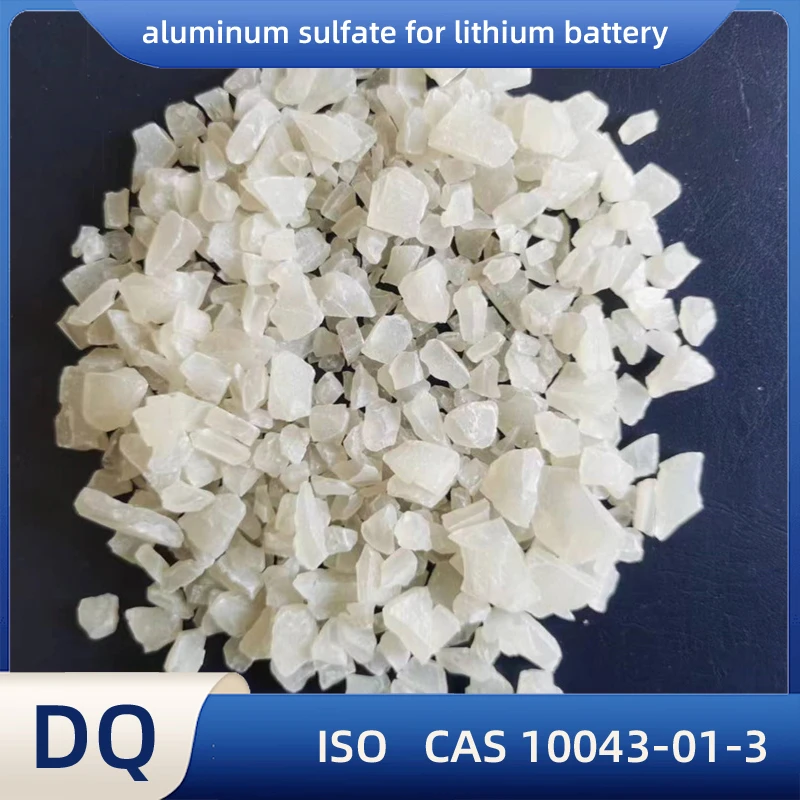
Battery-grade aluminum sulfate can act as an inhibitor for some of these side reactions. The sulfate ions in aluminum sulfate can react with certain reactive species in the electrolyte to form stable compounds, thereby reducing the occurrence of unwanted reactions. Additionally, the presence of aluminum ions can modify the surface properties of the electrodes, making them less prone to side reactions. By suppressing these side reactions, battery-grade aluminum sulfate helps to maintain the integrity of the battery components and improves the high-rate discharge performance.
Real - World Applications and Benefits
The improved high-rate discharge performance enabled by battery-grade aluminum sulfate has far - reaching implications in various industries.
Electric Vehicles
In electric vehicles (EVs), high-rate discharge performance is crucial for acceleration and powering auxiliary systems. With the addition of battery-grade aluminum sulfate in the battery electrolyte, EV batteries can deliver more power quickly, resulting in faster acceleration and better overall performance. This not only enhances the driving experience but also makes EVs more competitive with traditional internal combustion engine vehicles.
Power Tools
Power tools, such as drills and saws, often require high - rate discharge to operate effectively under heavy loads. Batteries containing battery-grade aluminum sulfate can provide the necessary power in a timely manner, allowing power tools to work more efficiently and with less downtime. This is particularly beneficial for professional tradespeople who rely on their tools for daily work.
Grid Energy Storage
Grid energy storage systems are used to store excess electricity from renewable sources and release it during peak demand periods. High - rate discharge performance is essential for these systems to respond quickly to changes in grid demand. By using battery-grade aluminum sulfate in the batteries of grid energy storage systems, operators can ensure a more stable and reliable power supply, contributing to the integration of renewable energy into the grid.
Our Product Offerings
As a trusted supplier of battery-grade aluminum sulfate, we offer a range of high - quality products to meet the diverse needs of our customers. In addition to our battery - grade aluminum sulfate, we also provide Drinking Water Treatment Aluminum Sulfate, which is used in water purification processes. Our Aluminum Sulfate14 - Hydrate is a popular choice for various industrial applications, and our Liquid Aluminum Sulfate offers convenience in handling and dosing.
Contact Us for Procurement
If you are interested in improving the high - rate discharge performance of your batteries, our battery - grade aluminum sulfate is the ideal solution. We are committed to providing high - quality products and excellent customer service. Whether you are a battery manufacturer, an energy storage system integrator, or a power tool producer, we can provide you with the right grade of aluminum sulfate to meet your specific requirements.
We encourage you to reach out to us for further information and to discuss your procurement needs. Our team of experts is ready to assist you in selecting the most suitable product and answering any questions you may have.
References
- Archer, L. A., & Zhao, Z. (2008). Applications of modern materials chemistry in rechargeable batteries. MRS Bulletin, 33(3), 217 - 225.
- Goodenough, J. B., & Park, K. S. (2013). The Li - ion rechargeable battery: a perspective. Journal of the American Chemical Society, 135(4), 1167 - 1176.
- Tarascon, J. M., & Armand, M. (2001). Issues and challenges facing rechargeable lithium batteries. Nature, 414(6861), 359 - 367.


