


As a reliable supplier of Aluminum Sulfate Flake, I have witnessed firsthand the diverse applications of this versatile chemical compound. One area that often raises questions among our customers is its compatibility with different pigments. In this blog post, I will delve into the compatibility issues of Aluminum Sulfate Flake with various pigments, shedding light on the factors that influence their interaction and offering practical insights for users.
Understanding Aluminum Sulfate Flake
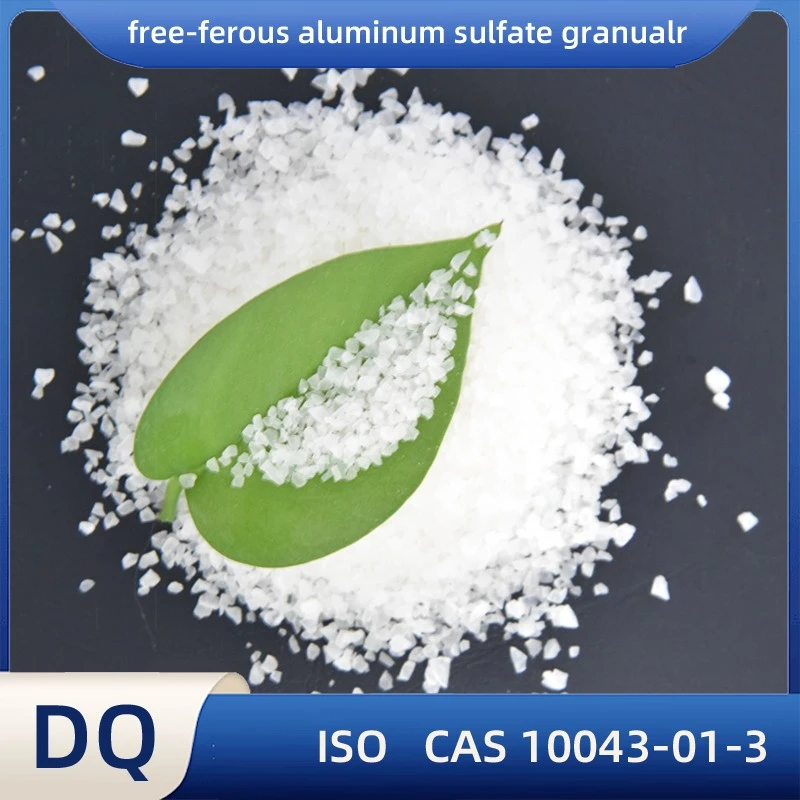
Aluminum Sulfate Flake, also known as alum, is a white crystalline solid with the chemical formula Al₂(SO₄)₃. It is widely used in various industries, including water treatment, paper manufacturing, and pigment production. In water treatment, Aluminum Sulfate Flake acts as a coagulant, helping to remove impurities and suspended particles from water. It is also used in the paper industry to improve the strength and brightness of paper. In pigment production, Aluminum Sulfate Flake can be used as a mordant, which helps to fix pigments to the substrate.

Compatibility with Organic Pigments
Organic pigments are widely used in the paint, ink, and plastics industries due to their excellent color strength and transparency. However, the compatibility of Aluminum Sulfate Flake with organic pigments can be affected by several factors, including the chemical structure of the pigment, the pH of the solution, and the presence of other additives.
- Chemical Structure of the Pigment: The chemical structure of the organic pigment plays a crucial role in its compatibility with Aluminum Sulfate Flake. Some organic pigments contain functional groups that can react with Aluminum Sulfate Flake, leading to changes in color, solubility, or stability. For example, pigments containing carboxylic acid groups may react with Aluminum Sulfate Flake to form insoluble aluminum carboxylates, which can cause precipitation and affect the performance of the pigment.
- pH of the Solution: The pH of the solution also affects the compatibility of Aluminum Sulfate Flake with organic pigments. Aluminum Sulfate Flake hydrolyzes in water to form aluminum hydroxide, which can change the pH of the solution. Some organic pigments are sensitive to pH changes and may undergo color shifts or degradation at high or low pH values. Therefore, it is important to control the pH of the solution when using Aluminum Sulfate Flake with organic pigments.
- Presence of Other Additives: The presence of other additives in the formulation can also affect the compatibility of Aluminum Sulfate Flake with organic pigments. Some additives, such as surfactants, dispersants, and stabilizers, may interact with Aluminum Sulfate Flake or the pigment, leading to changes in the properties of the system. For example, surfactants can reduce the surface tension of the solution and improve the dispersion of the pigment, but they may also interact with Aluminum Sulfate Flake to form complexes or aggregates, which can affect the performance of the pigment.
Compatibility with Inorganic Pigments
Inorganic pigments are widely used in the construction, ceramics, and glass industries due to their excellent heat resistance, weatherability, and chemical stability. The compatibility of Aluminum Sulfate Flake with inorganic pigments is generally better than that with organic pigments, but it can still be affected by several factors, including the crystal structure of the pigment, the particle size, and the surface properties.
- Crystal Structure of the Pigment: The crystal structure of the inorganic pigment plays a crucial role in its compatibility with Aluminum Sulfate Flake. Some inorganic pigments have a high surface area and a porous structure, which can adsorb Aluminum Sulfate Flake on their surface. This can lead to changes in the surface properties of the pigment, such as the zeta potential and the surface charge density, which can affect the dispersion and stability of the pigment in the system.
- Particle Size: The particle size of the inorganic pigment also affects its compatibility with Aluminum Sulfate Flake. Smaller particles have a higher surface area and a greater tendency to agglomerate, which can affect the dispersion and stability of the pigment in the system. Aluminum Sulfate Flake can act as a flocculant, causing the pigment particles to agglomerate and settle out of the solution. Therefore, it is important to control the particle size of the pigment when using Aluminum Sulfate Flake.
- Surface Properties: The surface properties of the inorganic pigment, such as the surface charge and the hydrophilicity, also affect its compatibility with Aluminum Sulfate Flake. Some inorganic pigments have a negative surface charge, which can interact with the positively charged aluminum ions in Aluminum Sulfate Flake, leading to the formation of complexes or aggregates. Therefore, it is important to consider the surface properties of the pigment when using Aluminum Sulfate Flake.
Practical Considerations
When using Aluminum Sulfate Flake with different pigments, it is important to consider the following practical considerations to ensure optimal compatibility and performance:
- Conduct Compatibility Tests: Before using Aluminum Sulfate Flake with a new pigment, it is recommended to conduct compatibility tests to evaluate the interaction between the two components. This can help to identify any potential compatibility issues and to determine the optimal formulation and processing conditions.
- Control the pH and Temperature: The pH and temperature of the solution can affect the compatibility of Aluminum Sulfate Flake with pigments. It is important to control these parameters within the recommended range to ensure optimal performance.
- Use Appropriate Additives: The use of appropriate additives, such as surfactants, dispersants, and stabilizers, can improve the compatibility of Aluminum Sulfate Flake with pigments. These additives can help to reduce the surface tension of the solution, improve the dispersion of the pigment, and prevent the formation of aggregates or complexes.
- Follow the Manufacturer's Recommendations: When using Aluminum Sulfate Flake with pigments, it is important to follow the manufacturer's recommendations regarding the dosage, mixing method, and storage conditions. This can help to ensure the quality and performance of the final product.
Conclusion
In conclusion, the compatibility of Aluminum Sulfate Flake with different pigments can be affected by several factors, including the chemical structure of the pigment, the pH of the solution, the presence of other additives, the crystal structure of the pigment, the particle size, and the surface properties. By understanding these factors and taking appropriate measures, such as conducting compatibility tests, controlling the pH and temperature, using appropriate additives, and following the manufacturer's recommendations, it is possible to achieve optimal compatibility and performance when using Aluminum Sulfate Flake with pigments.
As a supplier of Aluminum Sulfate Flake, we are committed to providing our customers with high-quality products and technical support. If you have any questions or need further information about the compatibility of Aluminum Sulfate Flake with pigments, please do not hesitate to [contact us for procurement and negotiation]. We look forward to working with you to meet your specific needs.
References
- "Water Treatment Aluminum Sulfate." Water Treatment Aluminum Sulfate.
- "Iron-ferric Aluminum Sulfate Flake." Iron-ferric Aluminum Sulfate Flake.
- "Iron-ferric Aluminum Sulfare Granular." Iron-ferric Aluminum Sulfare Granular.


