


Hey there! As a supplier of Aluminum Sulfate Flake, I've gotten a bunch of questions about how it impacts the setting time of concrete. So, I thought I'd dive into this topic and share what I know.
First off, let's talk a bit about concrete. Concrete is a mixture of cement, aggregates (like sand and gravel), water, and sometimes additives. The setting time of concrete is super important. It refers to the time it takes for concrete to change from a plastic, workable state to a hardened one. There are two main stages: initial setting time, when the concrete starts to lose its plasticity, and final setting time, when it's fully hardened.
Now, Aluminum Sulfate Flake is a compound that can have a significant effect on this setting time. When you add Aluminum Sulfate Flake to concrete, it reacts with the components in the cement. Cement contains various compounds like tricalcium silicate, dicalcium silicate, tricalcium aluminate, and tetracalcium aluminoferrite. The Aluminum Sulfate Flake mainly interacts with the tricalcium aluminate in the cement.
The reaction between Aluminum Sulfate Flake and tricalcium aluminate forms ettringite. Ettringite is a needle - shaped crystal that starts to form relatively quickly. This formation of ettringite speeds up the initial setting time of the concrete. In other words, the concrete starts to stiffen faster than it would without the addition of Aluminum Sulfate Flake.
But why is this important? Well, in some construction projects, a faster initial setting time can be a huge advantage. For example, if you're working in an environment where there's a risk of rain or if you need to move on to the next stage of construction quickly, a faster - setting concrete can save a lot of time. You can start applying finishes or doing other work on the concrete surface sooner.
However, it's not all about speed. We also need to consider the final setting time and the long - term strength of the concrete. While Aluminum Sulfate Flake can speed up the initial setting, it doesn't necessarily mean that the final setting time will be proportionally reduced. In fact, if too much Aluminum Sulfate Flake is added, it can cause problems. Excessive amounts can lead to an over - production of ettringite, which can cause expansion and cracking in the concrete over time. This is because the expansion of ettringite crystals can put stress on the concrete structure.
So, it's crucial to find the right dosage of Aluminum Sulfate Flake. This depends on several factors, such as the type of cement being used, the environmental conditions (temperature, humidity), and the specific requirements of the construction project. Usually, a small percentage (around 1 - 3% by weight of the cement) of Aluminum Sulfate Flake is added to achieve the desired effect on the setting time without compromising the long - term integrity of the concrete.
Now, let me tell you a bit about the different types of aluminum sulfate products we offer. We have Iron - ferric Aluminum Sulfare Granular. This type has some iron content, which can be beneficial in certain applications. The iron can contribute to the color and some of the physical properties of the concrete.
Then, there's Iron - free Aluminum Sulfate. This is great for projects where you don't want any iron - related discoloration in the concrete. For example, if you're making decorative concrete or if the concrete will be exposed to a corrosive environment where iron could cause rusting.
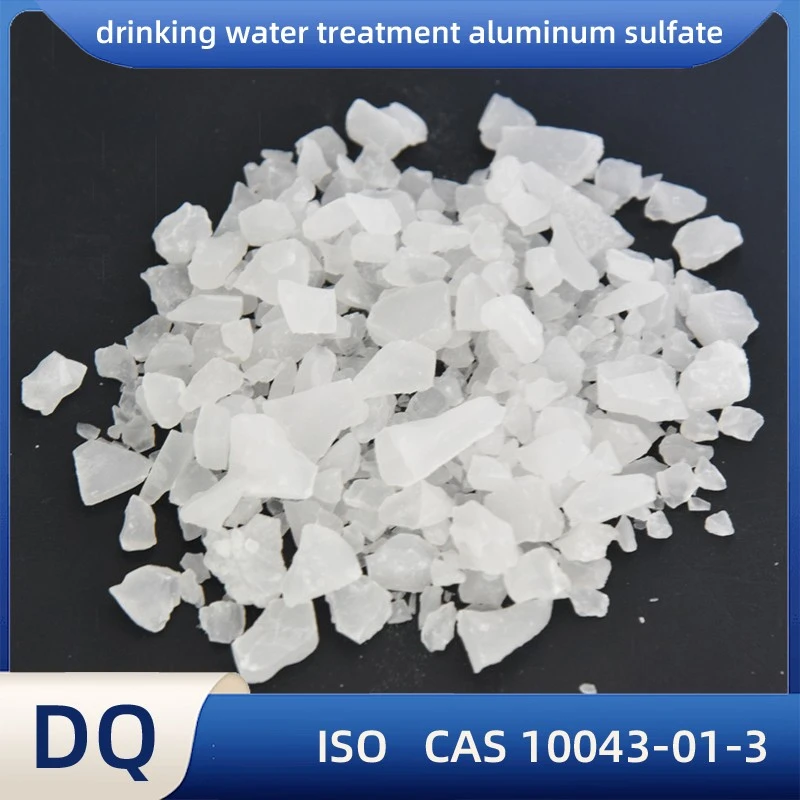

We also have Drinking Water Treatment Aluminum Sulfate. Although it's mainly used for water treatment, in some cases, it can also be used in concrete if it meets the necessary quality standards. This type is highly pure and can be a good option when you need a clean and high - quality additive for your concrete.
In conclusion, Aluminum Sulfate Flake can have a significant impact on the setting time of concrete. It can speed up the initial setting, which can be useful in many construction scenarios. But we need to be careful with the dosage to ensure that the long - term performance of the concrete isn't affected.
If you're involved in a construction project and think Aluminum Sulfate Flake could be a good fit for your concrete needs, I'd love to talk to you. Whether you have questions about the right type of aluminum sulfate or the proper dosage, I'm here to help. Contact me to discuss your requirements and we can work together to find the best solution for your project.
References
- Neville, A. M. (2011). Properties of Concrete. Pearson Education.
- Mindess, S., Young, J. F., & Darwin, D. (2003). Concrete. Prentice Hall.


