


As a trusted supplier of Aluminum Sulfate Granular, I often receive inquiries about its diverse applications. One question that frequently comes up is whether Aluminum Sulfate Granular can be used in the leather industry. In this blog post, I'll delve into the potential uses, benefits, and considerations of using Aluminum Sulfate Granular in leather processing.
Understanding Aluminum Sulfate Granular
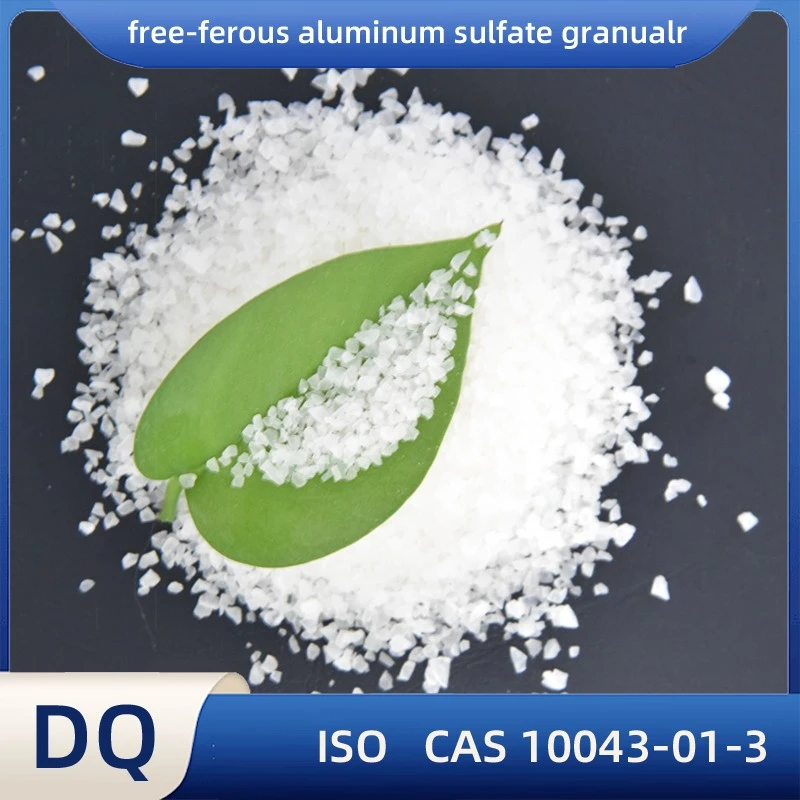
Before we explore its applications in the leather industry, let's first understand what Aluminum Sulfate Granular is. Aluminum Sulfate, with the chemical formula Al₂(SO₄)₃, is a white crystalline solid that is soluble in water. The granular form is convenient for handling and storage. It has a wide range of applications in various industries, including water treatment, paper manufacturing, and the textile industry. You can also explore other forms of aluminum sulfate on our website, such as Aluminum Sulfate Powder and Iron-free Aluminum Sulfate.
Potential Uses in the Leather Industry
In the leather industry, Aluminum Sulfate Granular can play several important roles. One of the primary uses is in the tanning process. Tanning is the process of converting raw hides and skins into leather, which involves stabilizing the collagen fibers in the skin to prevent decomposition and make the leather more durable.
Tanning Agent
Aluminum Sulfate Granular can act as a tanning agent, although it is not as commonly used as some other tanning agents like chromium salts. When used in tanning, it helps to cross-link the collagen fibers in the skin, making the leather more resistant to water, heat, and mechanical stress. This results in a leather product that is more durable and has better dimensional stability.
Pickling Agent
Another application of Aluminum Sulfate Granular in the leather industry is as a pickling agent. Pickling is a pre-tanning process that involves treating the hides and skins with an acidic solution to prepare them for tanning. Aluminum Sulfate Granular can be used to adjust the pH of the pickling solution and help to open up the pores of the skin, allowing the tanning agents to penetrate more effectively.
Fatliquoring Agent
Fatliquoring is a process that involves adding fats and oils to the leather to make it more soft, supple, and flexible. Aluminum Sulfate Granular can be used in fatliquoring formulations to help emulsify the fats and oils and improve their dispersion in the leather. This results in a leather product that has a more uniform appearance and feel.
Benefits of Using Aluminum Sulfate Granular in the Leather Industry
There are several benefits to using Aluminum Sulfate Granular in the leather industry.

Cost-Effective
Compared to some other tanning agents, Aluminum Sulfate Granular is relatively inexpensive. This makes it an attractive option for leather manufacturers who are looking to reduce their production costs without sacrificing the quality of their products.
Environmentally Friendly
Aluminum Sulfate Granular is considered to be a more environmentally friendly tanning agent compared to some other options, such as chromium salts. Chromium salts are known to be toxic and can cause environmental pollution if not properly managed. Aluminum Sulfate Granular, on the other hand, is less toxic and has a lower environmental impact.
Versatility
Aluminum Sulfate Granular can be used in a variety of leather processing applications, including tanning, pickling, and fatliquoring. This versatility makes it a valuable tool for leather manufacturers who need to use different processes to produce a wide range of leather products.
Considerations and Limitations
While Aluminum Sulfate Granular has many potential benefits in the leather industry, there are also some considerations and limitations that need to be taken into account.
Tanning Efficiency
Compared to some other tanning agents, Aluminum Sulfate Granular may not be as effective in tanning the leather. This means that it may require longer tanning times or higher concentrations to achieve the same level of tanning as other agents.
Leather Quality
The quality of the leather produced using Aluminum Sulfate Granular may not be as high as that produced using some other tanning agents. The leather may be less durable, have a lower resistance to water and heat, and may not have the same level of softness and flexibility as leather produced using other agents.
Compatibility with Other Chemicals
Aluminum Sulfate Granular may not be compatible with all other chemicals used in the leather industry. It is important to test the compatibility of Aluminum Sulfate Granular with other chemicals before using it in a leather processing formulation to avoid any potential chemical reactions or adverse effects on the leather quality.
Conclusion
In conclusion, Aluminum Sulfate Granular can be used in the leather industry for several applications, including tanning, pickling, and fatliquoring. It offers several benefits, such as cost-effectiveness, environmental friendliness, and versatility. However, it also has some limitations, such as lower tanning efficiency and potential quality issues.
If you are a leather manufacturer looking for a cost-effective and environmentally friendly tanning agent or other leather processing chemicals, Aluminum Sulfate Granular may be a suitable option for you. We also offer Iron-ferric Aluminum Sulfare Granular, which may have different properties and applications depending on your specific needs.
If you are interested in learning more about our Aluminum Sulfate Granular products or would like to discuss your specific requirements, please feel free to contact us. We would be happy to provide you with more information and assist you in finding the right solution for your leather processing needs.
References
- "Leather Technology Handbook" by John W. Constable
- "The Chemistry of Leather Manufacture" by George A. G. Roberts
- "Aluminum Compounds in the Leather Industry" by K. C. Srivastava


